 Fitness
Walking Pad Review: Are They Worth It for Home Use?
Meta Description
Walking pad review: what under-desk treadmills cost in 2026, the speed, incline, and capacity specs that matter, safety warnings, and who benefits.
URL Slug
walking-pad-review-are-they-worth-it-for-home-use
Primary Keyword
walking pad review
Search Intent
Informational and commercial investigation into under-desk treadmills, pricing, specifications, and buying viability.
Recommended H1
Walking Pad Review: Are They Worth It for Home Use?
Quick Answer
A walking pad is an ultra-slim, rail-less treadmill designed for low-impact walking at home or under a standing desk. They typically top out at 3.7 to 4 mph, fold in half for easy storage, and provide an effective way to log thousands of daily steps during sedentary work hours. For remote professionals and small-space dwellers, they are worth it; for runners or high-intensity trainers, they are not.
Quick Product Verdict
Under-desk walking pads have evolved into reliable, quiet fitness tools for home offices, backed by testing from publications like WIRED and Tom's Guide. While durability varies and entry speeds require getting used to, models ranging from the budget-friendly DeerRun Q1 Mini to the incline-capable Urevo CyberPad successfully break up sedentary sitting without demanding gym space.
Who This Product Is Best For
- Remote and hybrid workers who sit for long hours and want to accumulate passive steps during calls and inbox management.
- Small-space residents in apartments or shared homes where a bulky traditional treadmill won't fit.
- Low-impact walkers and seniors seeking gentle daily movement (with medical clearance for balance considerations).
- Incline seekers who want hill-walking intensity from compact folding models.
Who Should Avoid It
- Runners and high-intensity fitness enthusiasts who require higher speeds and stabilizing handrails.
- Tall walkers with long strides who will feel restricted by compact, narrow budget belts.
- Buyers who won't commit to a daily habit, turning the machine into an expensive floor ornament.
What Is a Walking Pad?
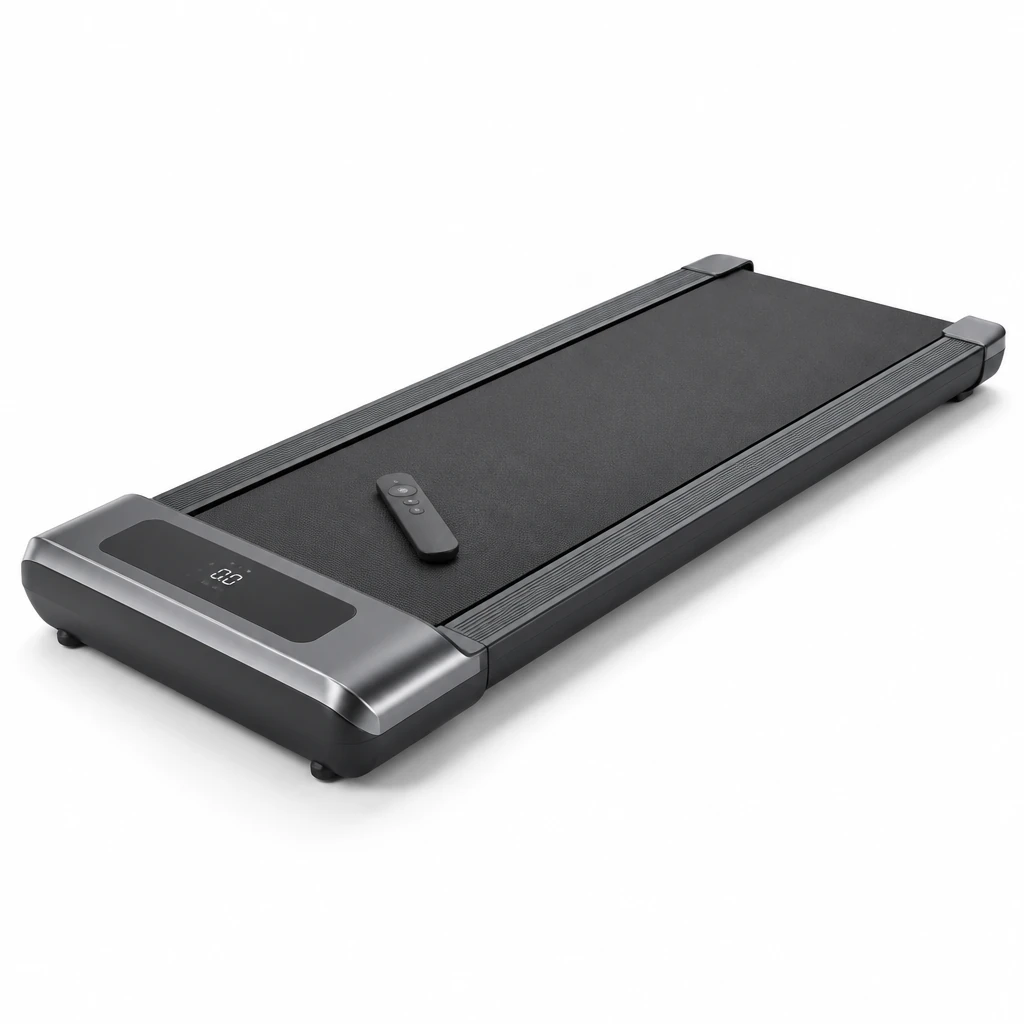
Walking pads—frequently categorized as under-desk treadmills—are streamlined exercise machines stripped of traditional bulky handrails and heavy console towers. Designed specifically for walking speeds (typically 0.5 to 4 mph), they feature low-profile decks measuring just a few inches high. Most models include wireless remote controls, integrated LED displays tracking time, speed, distance, and calories, and transport wheels for effortless storage under a couch or upright against a wall.
Key Specifications
| Specification | Details | Buyer Relevance |
|---|---|---|
| Speed Range | 0.5 to 4 mph (up to 7.6 mph on hybrids) | Optimized for walking; higher speeds require handrails for safety. |
| Deck Height | 4 to 8 inches | Low profile ensures easy mounting and sliding under low furniture. |
| Weight Capacity | 220 to 400 lb depending on class | Select a model with adequate weight margin for stability and motor longevity. |
| Incline Options | Flat or adjustable up to 14% | Incline models increase calorie burn and target glutes/calves. |
| Storage | Foldable or flat design with transport wheels | Crucial for small spaces and quick cleanup after working hours. |
What Comes in the Box
- Slim walking pad / under-desk treadmill unit
- Wireless remote control (with battery)
- Power cord (standard 110V household plug)
- Maintenance supplies (silicone lubricant oil for the belt)
- User manual and quick-start guide
Design and Build Quality
Modern walking pads rely on lightweight composite frames and compact motor housings to balance durability with portability. Units typically weigh between 42 and 73 pounds, heavy enough to remain stable during a stroll yet light enough to maneuver via built-in transport wheels. Higher-end models feature multi-layer shock absorption decks that reduce joint impact compared to hard outdoor pavement, making them comfortable for barefoot or light athletic shoe use.
Performance
Performance varies significantly by price class. Budget flat models like the DeerRun Q1 Mini offer steady, reliable speeds up to 3.8 mph for light tasks. Premium variants, such as the Urevo CyberPad and Flexispot Auto Incline, introduce motorized inclines up to 14% to elevate heart rates without increasing speed. Motors are generally rated for continuous low-speed walking, though buyers should note that prolonged daily use at maximum capacity on budget units can accelerate belt wear.
Ease of Use
Operating a walking pad is intentionally straightforward. Most arrive fully assembled out of the box. Users control speed adjustments via a handheld wireless remote or companion mobile apps (such as KS Fit). Starting at a gentle 0.5 mph allows workers to safely adjust their posture and typing rhythm before moving up to a brisk 2 to 3 mph working pace.
Maintenance and Cleaning
To maintain smooth belt rotation and prevent motor strain, walking pads require occasional user maintenance. This involves applying silicone treadmill lubricant underneath the walking belt every few months depending on usage frequency. Wiping down the deck and clearing dust from the motor vents ensures long-term reliability.
Safety and Reliability
Because rail-less walking pads lack side handlebars, balance is entirely self-managed. Users should start at slow speeds to find their footing. Furthermore, buyers should heed official regulatory notices: for instance, regulatory agencies such as the U.S. Consumer Product Safety Commission have previously issued warnings regarding specific budget brands (such as certain Sperax models) due to potential electrical or sudden-stop hazards, emphasizing the importance of purchasing verified, reputable brands.
Warranty, Returns, and Support
Reputable walking pad manufacturers typically offer warranties ranging from 1 year to 2 years covering motor and structural frame defects. Retail return policies generally span 30 days, though restocking fees may apply for heavy freight items. Buyers should verify warranty terms directly with the retailer prior to purchase.
Pricing and Value for Money
Walking pads span several distinct price tiers:
- Budget Entry-Level ($150–$300): Basic flat pads like the DeerRun Q1 Mini offer high utility without breaking the bank.
- Mid-Tier Foldable ($300–$500): Space-saving folding decks and app integration (e.g., WalkingPad Z1).
- Premium Incline & Hybrid ($500+): Advanced models featuring motorized inclines (Flexispot, Urevo CyberPad) or dual-mode running capabilities.
Pros and Cons
| Pros | Cons |
|---|---|
| Converts sedentary desk hours into active step counts | Rail-less design means no running on standard walking pads |
| Extremely compact and often foldable for apartment living | Inconsistent mobile app performance across certain brands |
| Significantly more affordable than traditional treadmills | Durability varies; heavy daily use can wear belts prematurely |
| Simple out-of-the-box setup with minimal maintenance | Noise levels vary during phone or video calls |
Limitations and Trade-Offs
The primary trade-off of a walking pad is its speed and stability ceiling. Without handrails, walking faster than 4 mph becomes unsafe for most users. Additionally, compact folding hinges, while space-saving, introduce mechanical joints that require careful handling over years of ownership.
Competitor Comparison
| Product | Best For | Strength | Limitation | Pricing Note |
|---|---|---|---|---|
| DeerRun Q1 Mini | Budget buyers | Tested reliability, compact footprint | No incline, short belt for tall strides | ~$149 RRP |
| WalkingPad Z1 | Small spaces | Folds compactly, sleek aesthetic | 242 lb weight capacity limit | ~$299 |
| Urevo CyberPad | Hill walkers | Up to 14% motorized incline | Heavier chassis | ~$450 |
| Flexispot Auto Incline | Quiet home offices | Exceptionally quiet motor operation | Premium price point | ~$500 |
Best Alternatives
- Traditional Treadmill: Better for running, sprinting, and robust incline training, though it requires permanent floor space.
- Under-Desk Elliptical or Bike: Offers seated pedal motion with zero balance risk, though it engages different muscle groups than walking.
- Standing Desk Alone: Breaks up prolonged sitting statically without requiring mechanical equipment.
Buying Guide
When selecting a walking pad, evaluate your available floor space, maximum user weight, and whether you prefer flat walking or hill inclines. If you plan to store the unit vertically or under a low sofa, prioritize folding models like the WalkingPad Z1. If you want a more intense cardiovascular workout while working, look toward incline-capable units like the Urevo CyberPad.
FAQs
On this page
Are walking pads worth it?
Yes, for desk-based professionals seeking to increase daily step counts and reduce sedentary time. Clinical and public health reviews indicate that active workstation equipment effectively increases daily energy expenditure. However, they do not replace heavy-duty cardio equipment for runners.
Can you run on a walking pad?
No. Standard walking pads lack handrails and safety tethers, making running hazardous. Users should strictly walk at speeds under 4 mph unless using a hybrid machine equipped with a secure, locked handrail.
How loud are walking pads during work calls?
Quality models operate relatively quietly (around 45–55 decibels), allowing for discreet use during virtual meetings or typing sessions, though motor sound increases slightly at maximum speed.
What should I verify before purchasing?
Verify your available floor space dimensions, the unit's maximum weight capacity against household users, current promotional pricing, and retailer return policies in case the deck size does not match your stride.
Final Verdict
Walking pads provide an exceptionally practical solution for modern remote workers and apartment dwellers wanting to integrate movement into sedentary routines. While they won't satisfy runners, models like the DeerRun Q1 Mini, WalkingPad Z1, and Urevo CyberPad deliver tremendous value, transforming idle desk hours into active health habits.
Affiliate Disclosure
Affiliate Disclosure: This article may contain affiliate links. If you buy through these links, we may earn a commission at no extra cost to you. Our recommendations remain based on available evidence, product fit, and buyer usefulness.
Note: Product images shown in editorial layouts are AI-generated illustrations.
Sources
All URLs checked or surfaced on 2026-11-08 (US market). Prices move — verify before publishing or buying.
- WIRED — "4 Best Walking Pads for Small Spaces and Standing Desks (2026)" (wired.com/story/best-walking-pads/(https://www.google.com/search?q=https%3A%2F%2Fwired.com%2Fstory%2Fbest-walking-pads%2F)), fetched 2026-11-08: Urevo CyberPad ($450, up to 14% incline, 4 mph, 264 lb, 2-yr warranty), WalkingPad C2 ($499, 3.7 mph, 220 lb, folds to ~5.4 in high, 1-yr), Urevo Strol 2S Pro ($550, 7.6 mph with rail up / 4 mph rail down, 265 lb), Flexispot Auto Incline ($500, quietest tested, 12% incline, 4 mph, 275 lb); honorable mentions incl. Toputure TP6 ($238), GoYouth ($270), Urevo SpaceWalk 5L ($400); price guidance (<$200 basic, $500+ premium); durability note; CPSC Sperax stop-use warning (Pro, Q1, RM-01, RM-02 — fall/fire hazards).
- Tom's Guide — "The best walking pads in 2026: the best under-desk treadmills, tested and rated" (tomsguide.com/best-picks/best-under-desk-treadmills(https://www.google.com/search?q=https%3A%2F%2Ftomsguide.com%2Fbest-picks%2Fbest-under-desk-treadmills)), fetched 2026-11-08: DeerRun Q1 Mini best overall ($149 RRP; 3.8 mph; 300 lb; 43 x 20 x 4 in; 41.8 lb; no incline; 3-month test; short-belt caveat for taller users); WalkingPad Z1 pick; Urevo FoldiMix 5L under $500; "you can't run on any of these under-desk treadmills" guidance; BMC Public Health 2021 systematic review (13 studies) on under-desk treadmill effectiveness.
- WalkingPad US store — WalkingPad Z1 product page (walkingpad.com/products/walkingpad-z1-under-desk-treadmill(https://www.google.com/search?q=https%3A%2F%2Fwalkingpad.com%2Fproducts%2Fwalkingpad-z1-under-desk-treadmill)), fetched 2026-11-08: $299 (was $329); speed 1–4 mph; walking area 47.6 x 15.7 in; capacity 242 lb; folded 31.8 x 22 x 5.4 in; net weight 51 lb; KS Fit app; 110V.
- U.S. CPSC — warning on Sperax walking pads and treadmills, 2026 (cpsc.gov/Warnings/2026/...): cited via WIRED; verify current status at cpsc.gov before publishing.